A cable laying-up machine RFQ should describe the cable to be made, not just the machine size a buyer has in mind. Two projects can use the same number of insulated cores yet need different reel handling, back-twist arrangements, take-up capacity and floor space. Supplying these details early gives the equipment supplier a useful technical baseline and makes competing proposals easier to compare.
Start with the finished cable construction
Send a cable drawing or a written construction sheet. Identify the application, applicable product specification, number and arrangement of insulated cores, individual core outside diameters, and the target diameter after laying-up. State whether fillers, a binder or a wrapping layer are part of the requested process. An overall finished-cable diameter measured after later sheathing is not a substitute for the diameter at the laying-up stage.
If several products will run on one line, list the smallest, largest and most frequently produced constructions. A quotation based only on the largest cable may overlook changeover requirements for routine production. If a value is not yet fixed, mark it as a range or request a recommendation rather than presenting an estimate as a specification.
Describe the incoming cores and supply reels
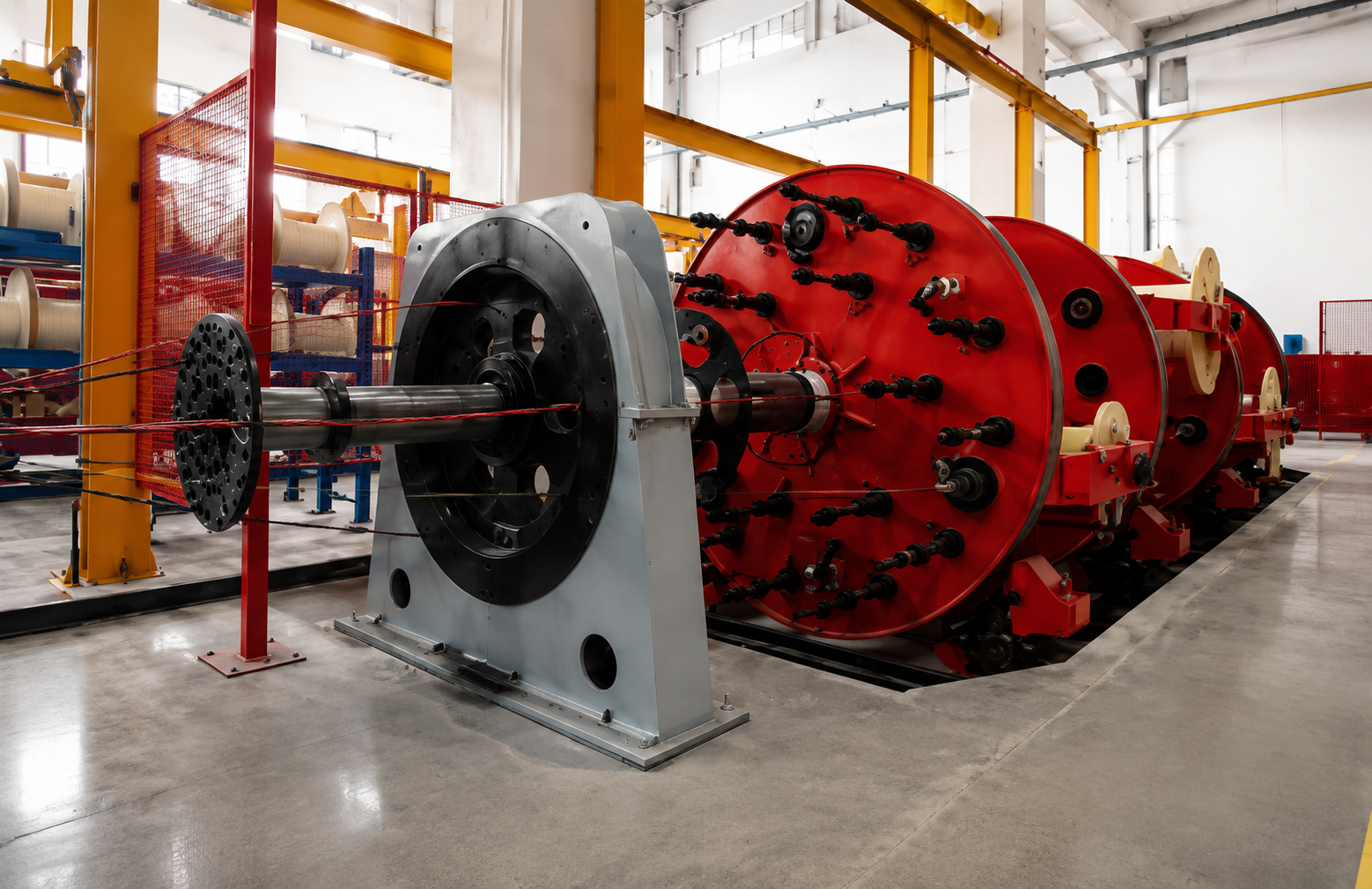
For each incoming core, give its material and construction, insulation or sheath type, nominal and tolerance diameters, and any handling limitations. Then provide reel drawings or at least flange diameter, barrel diameter, width, shaft opening and maximum loaded weight. Indicate how reels arrive at the machine and whether loading is manual, hoist-assisted or integrated with a bobbin loading device.
Reel dimensions matter at both ends of the line. Distinguish the supply reels inside the machine from the output reel used after laying-up. The number printed in a machine model name should not be treated as a confirmed reel dimension; ask for the actual configuration drawing.
Define the process and production target
Specify the required lay direction and lay-length range for each cable construction. State whether the cores need back-twist and what the finished assembly must preserve, such as core orientation or roundness. Ask the supplier to explain how the proposed machine controls payout tension for the particular core sizes and materials.
For output, give the production target and operating pattern: continuous long runs, frequent construction changes, or a mixture. Ask for an expected working range for representative products rather than comparing catalog maximum cage RPM alone. Cage rotation, lay length, traction and reel handling interact; their separate maximum values do not automatically describe one achievable production condition. The companion guide to bobbin count, RPM, lay length and line speed explains how to read these figures.
Show where the machine will sit in the plant
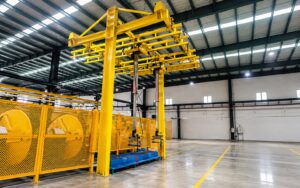
Provide the available floor length and width, ceiling and lifting limits, access route, power supply, and preferred operator side. Identify existing upstream and downstream equipment, including any wrapping head, traction unit or take-up and traversing rack that must work with the new machine. The quotation should state which of these items are included and which are customer-supplied.
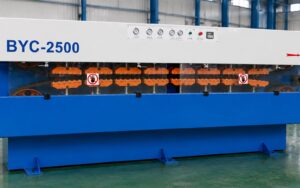
BYC’s cable forming machine is one relevant starting point for larger insulated-core laying-up projects. Its published page describes selectable configurations; the exact fit must be checked against the customer’s construction and line layout.
Copy this short RFQ checklist
- Product: cable drawing, application, core count, core dimensions, target diameter and applicable specification.
- Materials: insulation or sheath type, allowable handling limits, and any fillers or wrapping requested.
- Reels: supply and output reel drawings, dimensions, loaded weights and loading method.
- Process: lay direction, lay-length range, back-twist requirement and quality checkpoints.
- Output: representative product mix, target production rate and frequency of changeovers.
- Site: floor plan, lifting and access constraints, utilities and equipment to be integrated.
- Scope: requested guarding, controls, documentation, training and acceptance test.
Compare quotations on the same basis
Ask each supplier to identify the assumed cable construction, included modules, optional items, utility requirements and proposed test conditions. A lower price may reflect a narrower equipment scope or different reel handling, not a like-for-like machine. Keep unresolved values visible in the quotation so they can be closed before an order is placed.
Frequently asked questions
Do I need to know the exact machine model before requesting a quote?
No. A clear cable construction, reel data and production goal are more useful than guessing a model number. The supplier can propose a configuration and explain its limits.
Can I quote from the finished cable outside diameter alone?
Not reliably. The diameter and condition at the laying-up stage, individual core sizes and the stages added later all affect the equipment choice.
What should I do when a process parameter is undecided?
Mark it as open and describe the product requirement it must satisfy. Request a documented recommendation and confirm it during technical review.
Preparing an RFQ? Send BYC your cable drawing and reel information so the proposed laying-up configuration can be discussed against the actual production requirement.