A cable haul-off supplies the forward pull that moves a product through a production line. Crawler and wheel machines make contact with the cable in different ways, so the right choice depends on the cable surface, required traction, working speed and available layout. Neither machine name, wheel diameter nor motor power by itself proves that a proposed unit will pull a particular cable without damage or slip.
What is the haul-off pulling?
Describe the product at the exact point where traction is applied. It may be an assembled core after laying-up, an armored cable before another layer, or a finished sheathed cable. Give its minimum and maximum outside diameter, approximate weight per unit length and surface condition. A soft or easily marked surface may need a different contact arrangement from a robust outer layer.
Also identify the upstream process. Pulling demand can change with machine configuration, cable construction, guides and line route. The haul-off must work with the main machine and take-up through acceleration, steady running, deceleration and stopping. A separate maximum-speed figure for each machine does not show that the combined line can run at the target working speed.
How crawler contact differs from wheel contact
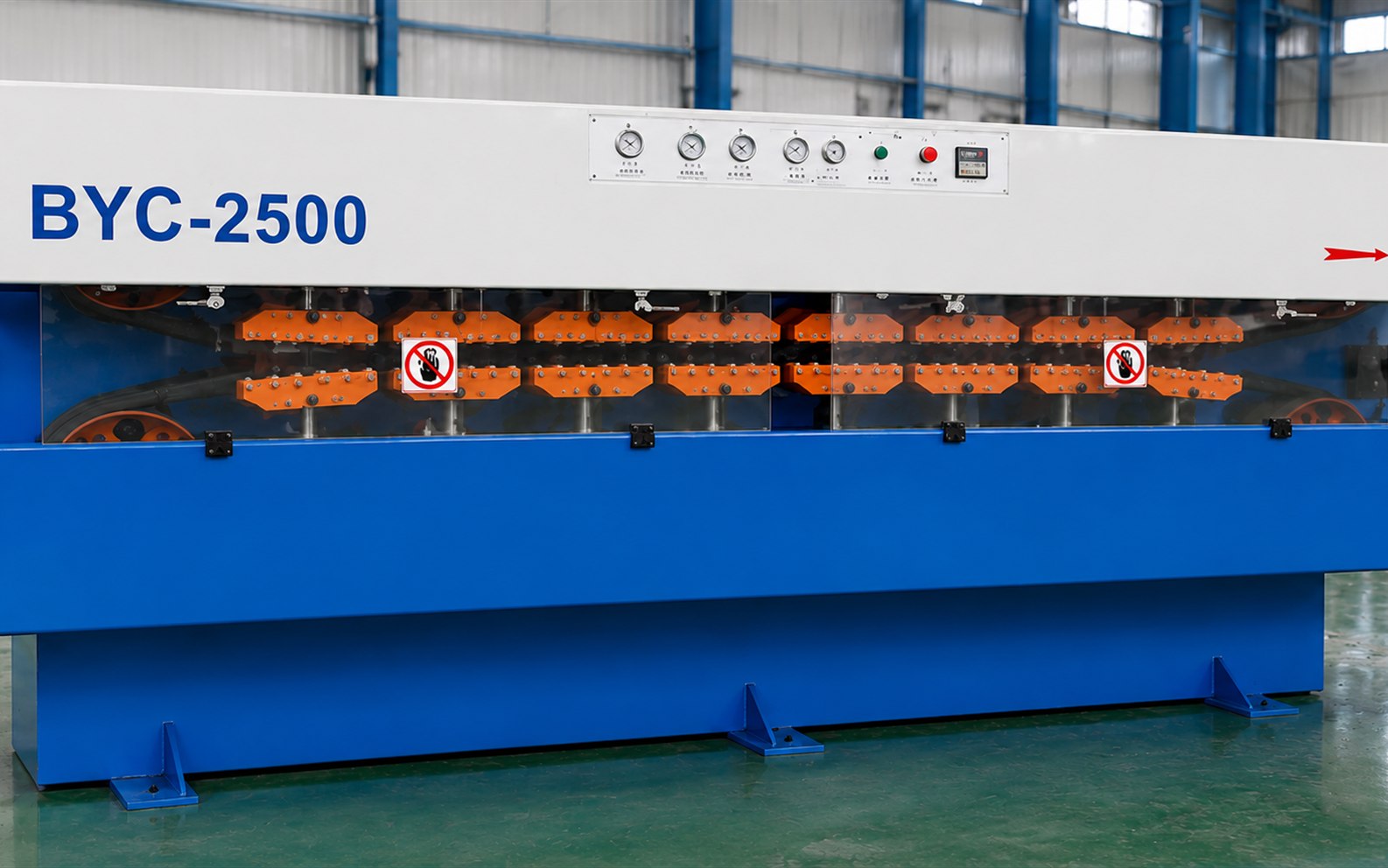
A crawler haul-off grips the product between moving belt surfaces over a defined contact path. BYC’s crawler tractor page describes paired cylinders and crawler belts, with model-dependent contact length and belt dimensions. These are machine-geometry details, not a published universal pulling-force or surface-pressure rating.
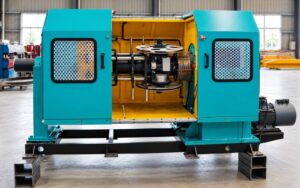
A wheel haul-off guides and pulls the cable around traction wheels. BYC’s wheel tractor page lists twin-wheel single-drive and dual-drive arrangements. Wheel size and drive arrangement have to be matched to the product and line; the published description does not say that one wheel arrangement is always stronger or gentler.
The practical comparison is where and how each proposed machine contacts the specific cable. Ask for the belt or wheel surface material, contact path, adjustable clamping or wrap arrangement, guarding and a trial on a representative product. Inspect the cable after the trial for marking, deformation or other defects defined by the product specification.
Specify the operating conditions
Request a stated pulling-force capability for the quoted configuration and ask how it is measured. Do not infer it from motor kilowatts or a model number. State the desired working speed range, especially the slow-speed conditions used for threading or startup. If several cable diameters share the line, ask what adjustments or contact parts change between products.
Lay out the physical route through the haul-off: entry and exit height, available straight length, bend constraints, surrounding guards and operator access. A wheel machine and a crawler machine may have different footprints and cable paths. The required space must be checked against the actual plant drawing, not only the standalone machine dimensions.
How to compare two quotations
- Confirm the same representative cable diameter, weight, surface and upstream process were used in both proposals.
- Compare stated working pull, working speed and the conditions under which each value applies.
- Review contact materials, adjustment range, wear parts and access for cleaning or maintenance.
- Ask how the haul-off speed coordinates with the main machine and take-up during starts and stops.
- Agree on a trial that records slip, surface condition and product quality using the actual or representative cable.
If the quotation only lists a maximum diameter and motor rating, request the missing operating data. For a BYC proposal, send a cable drawing, surface-quality requirements and current line layout so the engineering team can evaluate a crawler or wheel arrangement against the same job.