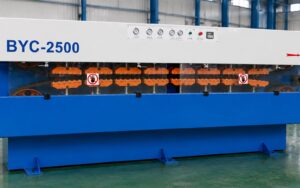

A stranding machine FAT checklist is most useful when buyer and supplier agree in advance what the equipment must demonstrate. Watching a strander or cabling machine rotate without the specified reels and product material does not answer every production question. A written factory acceptance test plan turns the visit into a check of the ordered configuration, representative running conditions and the records needed for installation.
This is a buyer’s planning checklist. The contractual specification and agreed test protocol take priority over any general list. Confirm test scope, materials, duration and acceptance criteria with the equipment supplier before travel or shipment.
Agree on the test basis before the FAT
Bring the approved cable or conductor drawing, purchase specification, machine layout and list of ordered options. Identify the representative product or products to be run, including material, incoming diameter, reel dimensions and required output structure. Agree who supplies the trial material and reels, how much is needed, and which measurements will be recorded.
Define pass or fail criteria for each critical requirement. A stated maximum cage RPM should not be treated as a promise that the line will produce every cable at that speed. Specify the load, lay length, material and other conditions that make a speed trial meaningful.
Verify the delivered configuration
- Compare machine model, number and arrangement of reel positions, loading system and supplied tooling with the order.
- Check the supplied tension-control arrangement, drive and control components against the approved technical agreement.
- Confirm the interfaces to the agreed haul-off, take-up, guarding and plant utilities.
- Review drawings, manuals, spare-parts information and electrical documentation that are due at this stage.
For example, BYC publishes a frame strander and a cable forming machine with different application ranges and selectable arrangements. The FAT should check the configuration actually ordered, not assume every option shown on a product page is included.
Separate no-load checks from a product trial
A no-load run can help check direction of rotation, controls, alarms, guarding and mechanical operation within the agreed procedure. It cannot by itself verify finished cable geometry or running behavior under material load. For the loaded trial, record the test material and reel details, machine settings, running duration and any interruptions. If an ordered item cannot be tested at the supplier’s plant, document how and when it will be checked later.
Do not bypass a guard or interlock to complete a demonstration. Any safety-related observation should be documented and resolved under the agreed procedure before the machine is accepted for shipment or operation.
Measure the output, not only the machine display
Inspect the trial product against its approved construction. Depending on the order, this may include conductor or cable diameter, lay length, surface condition, arrangement of wires or cores, and winding quality on the output reel. Note the measuring method and sample locations. Compare recorded speed and operating behavior with the agreed trial conditions, not an isolated catalog maximum.
When a result is outside the agreed range, record the observation, proposed correction, responsible party and retest requirement. A brief video can support the record, but it does not replace measured results or a signed test report.
Close the handover record
Before signing the FAT record, list all open points and distinguish completed checks from items deferred to site acceptance. Confirm what documents, spare parts, training material and installation instructions will accompany the machine. Site acceptance may still be needed to check the equipment with the customer’s utilities, floor layout and adjacent machines.
Questions to put in the FAT plan
- Which exact cable or conductor construction will be used for the trial?
- Which reels, materials and tooling are required, and who supplies them?
- Which speed, lay, geometry and winding measures are acceptance criteria?
- How will alarms, guarding and ordered controls be demonstrated safely?
- What evidence is recorded, who approves it and how are open points closed?
Frequently asked questions
Is an unloaded run enough for acceptance?
It can verify some mechanical and control functions, but it cannot demonstrate the quality of a specified cable or conductor under production material. Agree whether a loaded trial is required.
Does FAT replace installation and site acceptance?
Not necessarily. The customer’s power supply, adjacent equipment and site layout may need separate checks after installation. Define both stages in the contract.
What if the trial material is unavailable?
Document the limitation, agree what can still be verified, and specify the later test, material and acceptance authority. Avoid treating an untested requirement as completed.
Before ordering a BYC stranding or cabling machine, discuss the proposed FAT scope alongside the machine configuration and cable drawing.