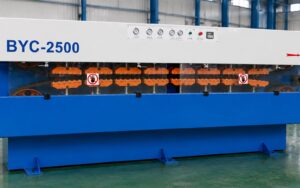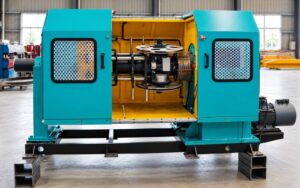
A copper wire shielding machine RFQ should describe the screen the cable design requires, the material that will feed the machine and the cable core that will pass through it. A model number alone cannot tell a supplier whether the proposed bobbin positions, wire handling and line layout match your product. If you are still deciding between copper wire and copper tape, start with our process comparison. This checklist begins after the cable design calls for a copper wire screen.
Send the approved screen construction
Attach the cable cross-section and identify the applicable customer specification or standard. State the number of copper wires, each wire’s nominal diameter, the intended lay direction and lay length, and any other elements that belong in the completed screen. Ask the cable engineer to define the required inspection criteria. Do not ask the machine supplier to choose a screen construction from an electrical performance target alone.
Give the minimum and maximum outside diameter of the core at the shielding stage, not just the finished cable diameter. Mention any variation in core shape or surface that may affect guides and wire placement. If one line must run several designs, send a representative drawing for each end of the product range.
Describe the copper wire and supply reels
For each input wire, provide material grade, nominal diameter, surface condition and any handling limits specified by your process team. Include a reel drawing with flange diameter, barrel diameter, width, shaft opening and maximum loaded weight. State whether reel sizes are shared across products and how frequently a full set is changed.
BYC’s copper wire shielding machine page describes shaft-mounted bobbins, mechanical-friction or magnetic-hysteresis tension arrangements, and a copper wire preforming device. These are equipment features to discuss for a quoted configuration; the page does not establish one tension setting or reel capacity for every cable. Ask which arrangement is included and how wire tension is adjusted and checked as reels empty.
Define the result and the line around the machine
Explain how the completed screen will be checked: wire distribution around the core, visible gaps or crossing, lay, surface condition and any product-specific test required by the approved design. Preforming may help guide the wires, but its setting should be assessed on the actual material and core. A photograph of the machine cannot verify finished screen quality.
Show the upstream pay-off, downstream haul-off and take-up, cable center height, available floor area, access for loading, and proposed working speed. Ask how the shielding machine coordinates during start, steady running and stop. The proposed speed must be evaluated with the required wire count, lay and material, rather than taken from an isolated maximum rotation figure.
A concise copper wire shielding RFQ checklist
- Approved cable drawing, screen construction and required inspection or test criteria.
- Core diameter and surface at the shielding stage, including representative products.
- Copper wire count, material, diameter, lay direction and lay length.
- Dimensioned supply reels, loaded weights and expected changeover pattern.
- Line layout, working speed, available utilities and equipment interfaces.
- Trial material and the method for checking the completed screen.
Request a quotation that identifies the proposed bobbin arrangement, tension method, preforming setup, operating assumptions and trial plan for your cable. That makes it possible to compare offers on the same construction instead of comparing only machine names.