Back-twist in cable laying-up concerns the rotation of an individual core while several cores are assembled around a common axis. A planetary arrangement can control that individual rotation as the cage turns. Whether the feature is needed, and how it should be set, depends on the cable construction and the material entering the machine. The words “planetary back-twist” alone do not define a finished cable specification.
Two rotations happen at different levels
During laying-up, the cores travel around the center of the forming cable to create the intended lay. Each supply bobbin can also rotate relative to its own axis as the cage moves. Back-twist is a mechanism for managing that second motion. It helps the process avoid imposing an unintended rotation on an individual core, subject to the chosen gear arrangement and operating settings.
This is different from pay-off tension. Tension concerns how strongly the core is pulled from its reel. Back-twist concerns orientation or twisting of the core as it travels through the rotating cage. A line may need both to be specified, but one does not substitute for the other.
Why the core construction matters
An insulated core may contain a shaped conductor, printed markings, a screened construction or other features whose orientation matters in the finished assembly. The amount and direction of allowable twist should come from the approved cable design and process plan. A flexible small core and a larger, more rigid core may not behave alike during the same lay-up operation.
Do not assume that “more back-twist” is inherently better. The useful target is the finished cable structure: core position, lay, surface condition and any orientation requirement. If the cable drawing does not state these requirements, resolve them with the cable engineer before turning a machine feature into a purchase specification.
What BYC’s equipment descriptions establish
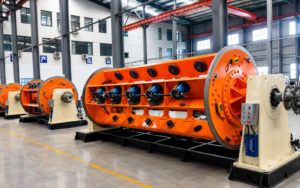
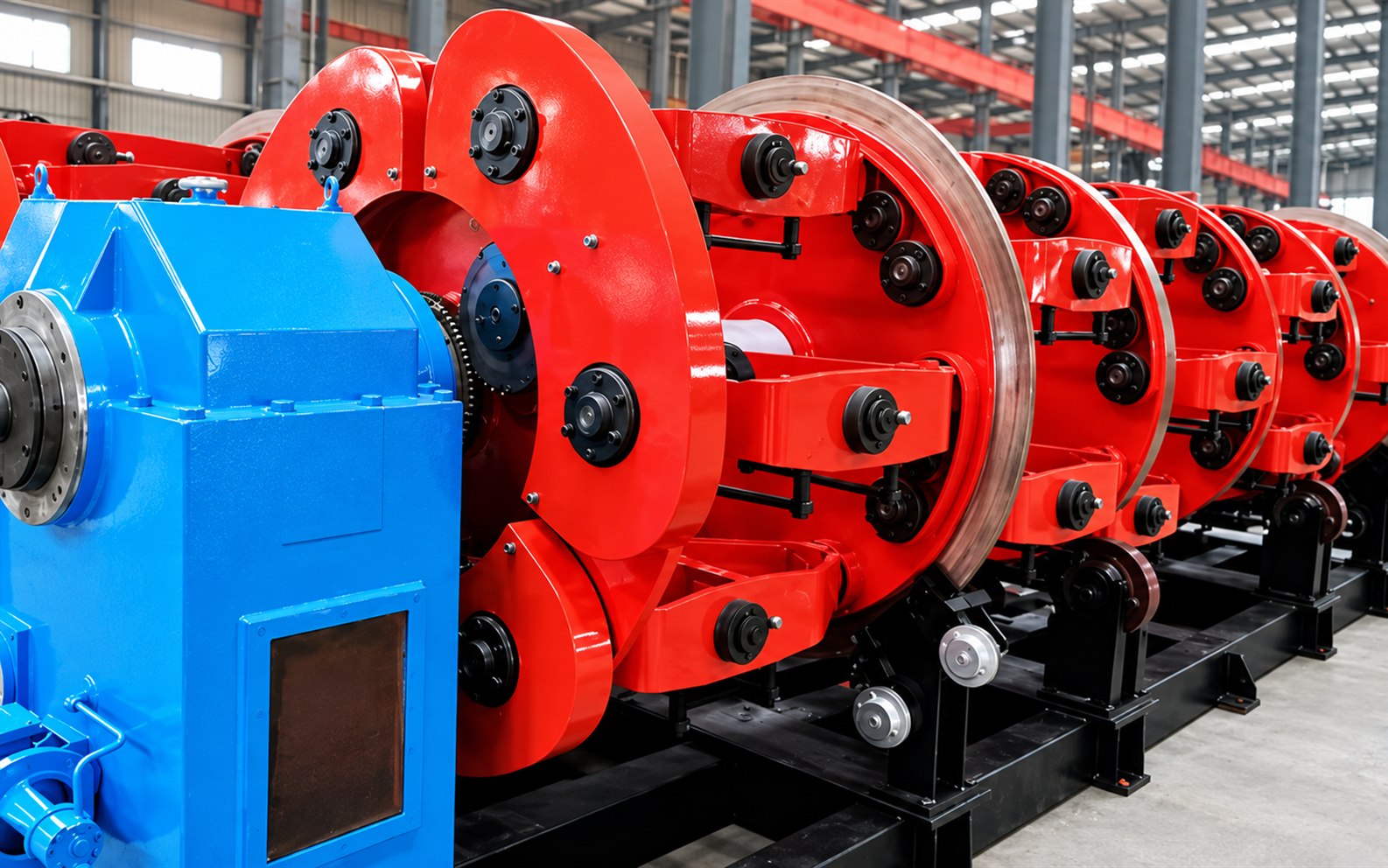
BYC describes a planetary gear back-twist system on its 1000–1600 cable forming machine, which is presented for laying up insulated cores into larger cable structures. Its 400–800 cage strander page also describes a parallel planetary gear back-twist structure for selected cabling and stranding applications. These pages establish that the mechanism is part of the described equipment families. They do not publish one universal back-twist ratio or prove the same operating range for every model and core.
Ask BYC to identify the exact cage, bobbin position, drive arrangement and back-twist setting included in the proposed machine. If the line will process more than one cable design, provide representative constructions rather than a single maximum diameter.
How to verify the proposed setup
Before a trial, agree on the core material, reel loading, lay direction, target lay length and line speed. Define how core orientation and finished assembly will be inspected. Run enough material to observe steady production as well as start and stop behavior. Record the actual settings used so a successful sample can be reproduced later.
Check any print, stripe, screen or shaped-core orientation only where the product specification requires it. Look for damage or irregular placement, but do not assign every defect to back-twist without checking tension, guides, reel condition and downstream handling. A controlled comparison requires the same incoming material and a documented change in settings.
Questions to include in the RFQ
- What is the input core construction and which features must keep a defined orientation?
- What are the core count, core diameters, target lay direction and lay range?
- Which planetary back-twist mechanism and adjustment are included in the quoted configuration?
- How will the required core orientation and finished cable quality be checked during acceptance?
- Which other settings, including pay-off tension and reel handling, must be recorded with the trial?
For a useful machine recommendation, send the cable cross-section and the core-level requirements to BYC. The engineering discussion can then focus on a documented result for your cable rather than a mechanism name.