Pay-off tension affects how a wire or core leaves its reel and enters a stranding machine. If it is poorly matched to the material, the strand may be difficult to place consistently; excessive force can damage sensitive material. Buyers often see “magnetic hysteresis” and “active pay-off” listed as options, but the names alone do not describe the tension range or finished-cable quality. This guide explains what each arrangement does and what evidence to request.
What tension control must do
As a reel empties, its effective radius and inertia change. The line also accelerates, runs at a set speed, slows, and stops. The pay-off arrangement must release material smoothly through those conditions while the downstream cage, traction, and take-up follow the intended cable construction. The target tension should be specified for the actual wire or core, not copied from another product.
Ask where tension is measured, how it is adjusted, and how the system responds during start-up, full-speed operation, reel change, and stopping. A motor, brake, or PLC label is not a substitute for a stated operating range and acceptance test.
Magnetic hysteresis: controlled resistance at pay-off
In a magnetic-hysteresis arrangement, a controllable magnetic device provides resisting torque as the line draws material from the reel. The machine uses that resistance to manage pay-off behavior. The exact component, adjustment method, and tension behavior depend on the supplied configuration; the term does not by itself establish a closed-loop tension system.
Because the reel diameter and running condition change, ask how the proposed machine maintains the specified tension across a full-to-near-empty reel. Confirm the wire diameter and material range, reel loading, tension setting method, monitoring, and the response to a broken wire or emergency stop. A published maximum cage speed should be read separately from these tension-control questions.
Active pay-off: a driven reel
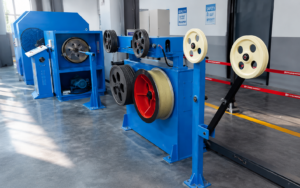
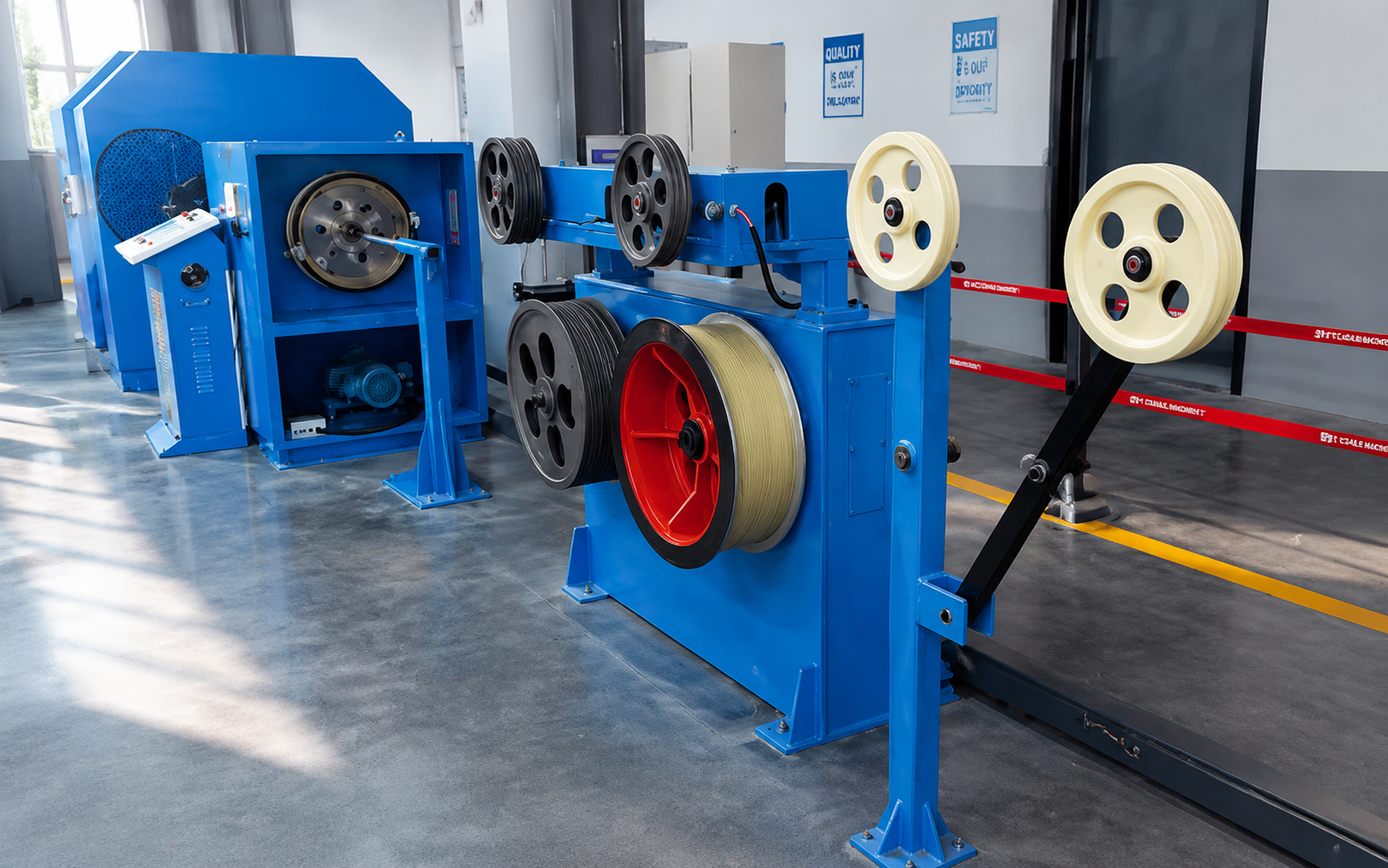
With active pay-off, a motor drives the reel to supply material in coordination with the line rather than relying only on the strand to pull it free. This can be useful when the material or process calls for more controlled feeding, but “active” does not guarantee a particular tension accuracy. Some arrangements use speed coordination, some add feedback from a sensor, and their performance must be confirmed for the quoted equipment.
Ask what signal controls the drive, whether tension is measured directly, how acceleration and deceleration are handled, and what happens when the reel becomes nearly empty. Verify the proposed motor, reel size, wire range, and controls as a complete package. The correct comparison is a material-specific operating proposal, not an assumption that a driven reel is always better.
How BYC presents the two choices
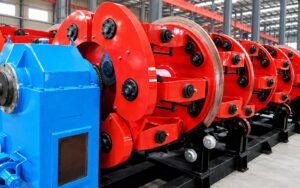
BYC lists magnetic-hysteresis and active-pay-off versions of its 200–315 cage-type strander. The published material ranges and maximum cage speeds differ between versions. Do not take the diameter range from one column and the speed from the other to describe a single proposed machine. Have BYC identify the exact model, cage configuration, pay-off version, and supported incoming material in its quotation.
For larger stranding configurations, review the separate 400–800 cage-strander specification and ask which tension arrangement is actually included. A control method described on one product page should not be assumed to apply to every machine in the catalog.
Selection checklist for your RFQ
- Material: identify copper, aluminum, or insulated core; include each incoming element’s diameter and surface requirements.
- Reels: specify dimensions, full and empty weights, loading method, and the expected change in running radius.
- Required tension: provide a target range and how it will be verified on the actual material.
- Operating cycle: state acceleration, steady speed, deceleration, stops, and reel changes.
- Finished cable: supply the lay design, quality checks, and acceptable defects.
- Proposal evidence: ask for a control description and factory acceptance plan for the quoted configuration.
What a meaningful trial should show
If possible, evaluate the proposed setup with the intended material and reel sizes. Record tension or an agreed proxy through start-up, steady running, and stopping; inspect the strand placement and surface condition. The acceptance method should be agreed before the trial. A smooth demonstration on a different wire does not automatically validate your cable.
This tension decision sits alongside the machine-selection questions in Cage Strander vs. Frame Strander. Send a cable drawing and incoming-material data to BYC so its engineering team can identify the pay-off option that fits the proposed line.
Frequently asked questions
Is magnetic hysteresis the same as magnetic-powder tension?
No. Both names involve magnetic components, but they describe different devices and control arrangements. Ask the supplier to identify the actual hardware and operating method on the quoted machine.
Does active pay-off always hold constant tension?
Not necessarily. A driven reel may be coordinated by speed, with or without measured tension feedback. Request the control architecture, stated range, and acceptance data.
Can the catalog maximum speed decide the pay-off type?
No. Compare the proposed speed together with material diameter, reel load, tension requirement, lay design, and finished-cable quality. The highest listed rpm does not answer how the material is fed.