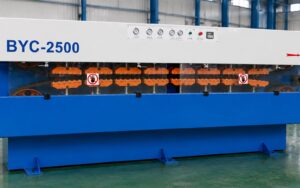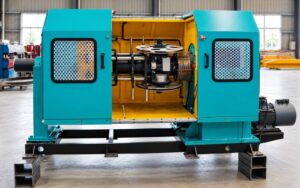
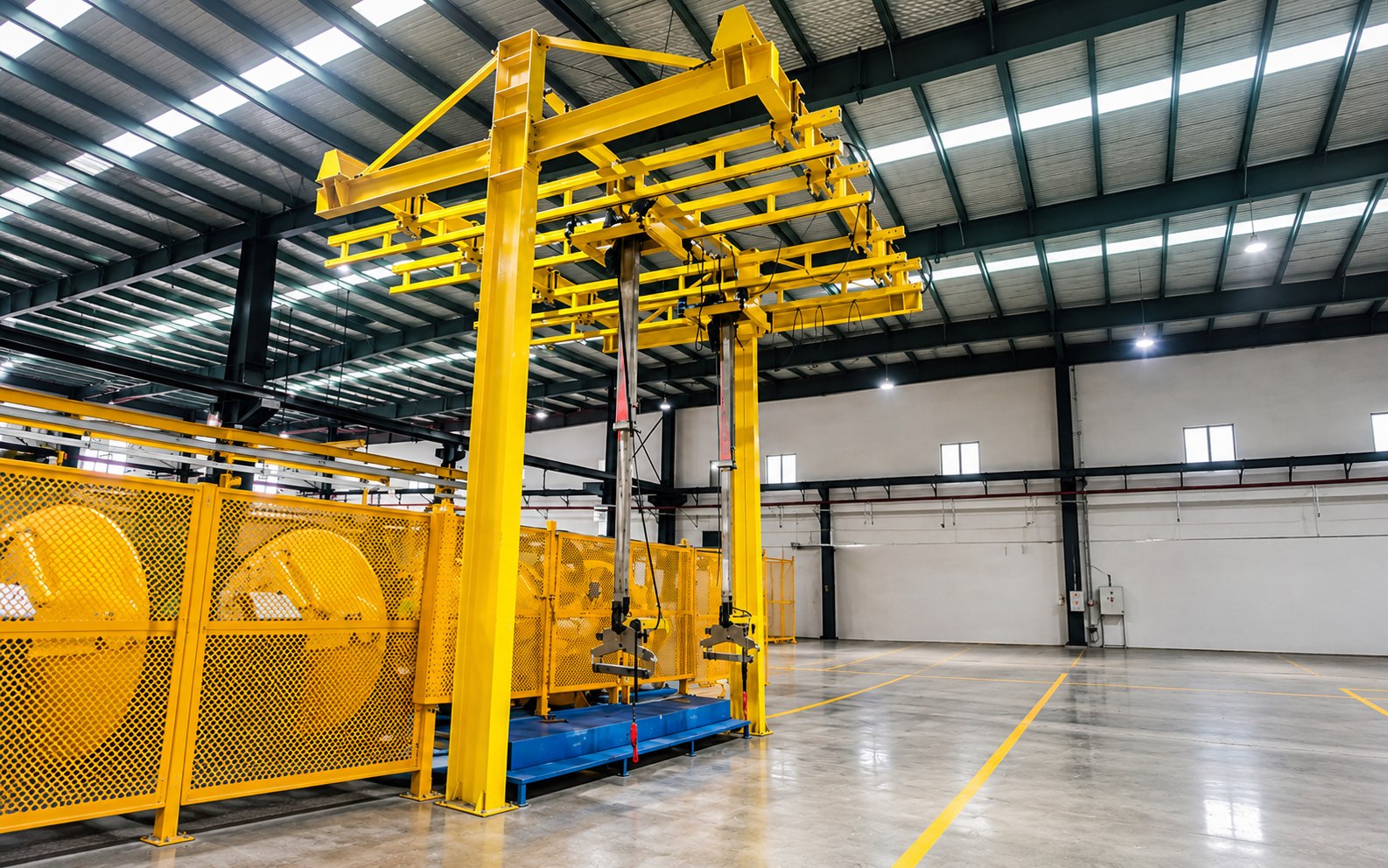
Stranding machine bobbin loading is a handling and layout decision as well as a machine accessory choice. Full and empty reels must move between storage, lifting equipment and the correct cage position without blocking the operator’s working area. Before choosing a loading device, map that movement and confirm the dimensions and loaded weight of every reel that the line will use.
Describe the reel, not just its nominal size
Send a dimensioned drawing for each bobbin type: flange diameter, barrel diameter, overall width, shaft opening and loaded weight. Identify which reels are shared across products and which belong to a special run. A nominal bobbin number or flange diameter does not establish the loaded weight or shaft fit.
The number of positions in a cage matters, but it does not tell the whole changeover story. Ask how many reels are typically changed at once, how often changes happen and whether adjacent positions restrict access. The handling plan for frequent small-batch changes may differ from one for long runs with heavy reels.
Walk the full loading route
Start at the reel storage area and trace the path to the machine. Record door widths, floor levels, turning space, overhead clearance and the capacity of the crane, hoist or forklift already on site. Check where a full reel waits, how it is presented to the loading device and where the empty reel goes. Include room for operators, guarding and maintenance; a plan showing only the machine footprint is incomplete.
BYC’s bobbin loading device page describes telescopic power-arm, single-beam hoist, pallet-type and double-beam gantry arrangements shown in its supplier catalog. These are configuration options, not a claim that every arrangement fits every BYC strander or plant. Ask for a project layout and a rated-load statement for the exact proposal.
Compare arrangements by the work they must do
For each proposed method, ask who positions the reel, where the lifting force is applied, how the reel is aligned with its machine position and which movements are powered. A pallet-based approach may affect floor movement and staging; a beam or gantry approach may depend on overhead space. The right comparison uses the actual plant route and reel weights, not a general ranking of device types.
Discuss changeover while the line is stopped: access to reel locks, shaft or arbor handling, threading and checks before restarting. The quotation should state what equipment is included and what plant lifting infrastructure the buyer must provide. This keeps scope, installation responsibilities and operator workflow clear.
What to request in a loading-device proposal
- A plan view and, where necessary, an elevation showing the loading path and clearance.
- Accepted reel dimensions and maximum loaded weight for each relevant position.
- The device’s rated load, travel or reach, power requirements and interfaces with the machine.
- Required guards, interlocks and operating instructions for the quoted configuration.
- A changeover demonstration with a representative full reel and the site’s intended lifting method.
If these items are not yet known, collect them before selecting an accessory from a catalog photo. Share the reel drawings and plant layout with BYC so the loading method can be proposed for the actual line and reviewed before purchase.